Accredited Knotweed Contractor in Clacton-on-Sea
PCA Accredited Experts in Japanese Knotweed Removal & Control
Get a Free Quote From Us Today!
We aim to get back to you in 24 hours.
At Accredited Knotweed Contractor, we specialise in the responsible management of Japanese knotweed in Clacton-on-Sea. As experts in invasive plant control, we use authorised methods to safely eradicate knotweed from residential and commercial properties.
Our team covers Clacton-on-Sea and the surrounding CO15 area, ensuring efficient and effective solutions tailored to your needs. Contact us today for a knotweed management plan.
What Is an Accredited Knotweed Contractor?
An accredited knotweed contractor is a professional service provider qualified to manage and remove Japanese knotweed in compliance with UK regulations. At Accredited Knotweed Contractor, we handle all aspects of knotweed control, from initial survey to complete eradication.
Our methods include excavation, herbicide treatment, and controlled removal, ensuring we comply with Environment Agency guidelines.
We use recognised industry practices such as the PCA Code of Practice to guide our operations. Excavation may involve the use of specialised machinery like mini-excavators and tracked dumpers to safely remove invasive roots.
Our herbicide treatments typically use glyphosate-based solutions, applied over a period of several months to ensure effective control.
We solve knotweed issues for homeowners, businesses, and local authorities. Our services are adaptable to various sites, whether it’s a residential garden, commercial premises, or public land.
Consult with us to ensure your knotweed problem is addressed effectively and sustainably.
How Much Does Knotweed Removal Cost in Clacton-on-Sea?
Knotweed removal costs typically range from £1,000 to £4,000 in Clacton-on-Sea. Prices depend on the extent of the infestation, the chosen method of treatment, and site specifics.
We often use herbicide treatment methods, such as foliar spray or stem injection, which are effective for smaller infestations and can take two to three growing seasons to fully eradicate the plant. For more severe infestations, excavation may be necessary, involving specialist equipment like root-barrier installations to prevent re-growth.
The site conditions, including access limitations and proximity to water sources, can also influence costs due to environmental regulations. As a licensed contractor, we comply with Environment Agency guidelines to ensure that our removal techniques adhere to national standards.
Our team at Accredited Knotweed Contractor provides tailored solutions, which may include excavation or treatment plans over several years.
Contact us for a detailed quote that suits your property and budget.
Get a Free No Obligation Quotation Today
Why Choose Accredited Knotweed Contractor in Clacton-on-Sea?
Choosing Accredited Knotweed Contractor ensures you receive expert knotweed management using certified techniques. Our experience across various property types allows us to deliver efficient services in Clacton-on-Sea.
We adhere strictly to guidelines, ensuring environmentally safe procedures. Plus, we offer guarantees on our knotweed treatments.
Get in touch to learn why we’re trusted by local clients.
What Types of Knotweed Treatment Are Available in Clacton-on-Sea?
We offer various knotweed treatment options in Clacton-on-Sea, designed to accommodate diverse site conditions and client needs. Our treatments include:
- Herbicide Spraying: Ideal for manageable infestations, this method employs systemic herbicides applied over several seasons to gradually deplete the knotweed’s energy reserves, leading to effective control.
- Stem Injection: This technique targets root systems directly by injecting herbicide into the stem, making it suitable for sensitive areas such as near watercourses or in public spaces, minimising environmental impact.
- Excavation: A method involving the complete removal of knotweed material and contaminated soil, typically used in development sites where immediate results are needed. The excavated material is carefully disposed of in compliance with environmental regulations.
- Root Barrier: Installation of a geotextile membrane to prevent spread, protecting unaffected areas by acting as a physical barrier against rhizome growth.
Each method is chosen after assessing the specific site conditions, ensuring an effective and compliant solution. Contact us for a consultation on the best approach for your property.
What Regulations Apply to Knotweed Control?
In the UK, knotweed management must comply with regulations set by the Environment Agency and enforced under the Wildlife and Countryside Act 1981. This means that businesses like ours are obligated to prevent the spread of this invasive species into the wild.
Waste disposal must follow the Environmental Protection Act 1990, which mandates that knotweed waste is treated as controlled waste and disposed of at licensed landfill sites. Additionally, we adhere to the guidelines outlined in the Code of Practice for the Management of Japanese Knotweed, ensuring our methods are eco-friendly and effective.
Our technicians are trained in specific techniques such as stem injection and foliar herbicide application, both of which are essential in effective knotweed eradication. We also stay updated with the Control of Pesticides Regulations 1986, which govern the safe use of chemicals during treatment.
At Accredited Knotweed Contractor, we ensure all procedures align with these legal standards, protecting both the environment and our clients.
Request a free quote
How Does Knotweed Removal Work?
Knotweed removal involves several steps, each critical to effectively managing this invasive plant. The process begins with a survey and assessment to evaluate the extent of the infestation and specific site conditions.
This includes identifying plant growth stages and soil types.
Next, we develop a customised treatment plan using appropriate methods such as herbicide application or excavation. Herbicides like Glyphosate may be used, targeting plant systems down to the rhizomes, while excavation involves physically removing Knotweed plant material with equipment like tracked excavators and ensuring contaminated soil is treated.
During the implementation phase, we conduct the chosen treatment over the specified timescale, adhering to standards such as the Environment Agency’s “Code of Practice for the Management, Destruction and Disposal of Japanese Knotweed”.
Finally, we perform regular monitoring, using equipment like survey rods, to ensure effective treatment and prevent regrowth by detecting early signs of resurgence.
We aim for thorough removal and long-term prevention in every project. Contact us to discuss your specific site needs.
How Long Does Knotweed Removal Take?
Knotweed removal typically takes several months to a few years for full eradication, depending on the treatment method. Herbicide treatments, such as glyphosate-based solutions, require repeated applications over multiple growing seasons to penetrate and kill the root system.
We often apply these herbicides with precision sprayers to ensure maximum absorption by the plant leaves.
In contrast, excavation offers quicker results by physically removing the rhizomes and plant material from the site, often in coordination with the use of root barriers to prevent re-infestation. This method is suitable for smaller infestations or when construction work is due to commence shortly thereafter.
We provide estimated timescales after our initial assessment in Clacton-on-Sea. Our team will consider local conditions and the presence of any nearby water sources when planning treatment.
If you’d like to discuss your situation further, please get in touch.
Get a Free Quote for Knotweed Removal in Clacton-on-Sea
Contact us today to arrange professional knotweed removal in Clacton-on-Sea. Our experienced team is ready to help manage your knotweed problem swiftly and safely.
speak with our team today
What People are Saying About Us
★★★★★
“We hired Accredited Knotweed Contractor to assess and manage Japanese knotweed on our property, and we were very impressed with the service. The team was professional, knowledgeable, and explained the treatment process clearly. They worked carefully and efficiently, keeping us informed throughout the project. Their attention to detail gave us confidence that the issue was being handled properly.”
Teagan Watts
★★★★★
“Accredited Knotweed Contractor provided an excellent service from the initial assessment through to the completion of the work. The team arrived on time, carried out a thorough inspection, and provided clear recommendations for managing the infestation. Communication was consistent and professional throughout. We were very pleased with the quality of the work and overall customer service.”
Esme McMillan
★★★★★
“Our experience with Accredited Knotweed Contractor was extremely positive. The specialists demonstrated excellent knowledge of knotweed management and took a careful, methodical approach to the treatment. They answered all our questions and kept us updated at every stage. The professionalism and reliability of the team really stood out.”
Raphael Phelps
★★★★★
“We used Accredited Knotweed Contractor for a property affected by Japanese knotweed and were very satisfied with the service. The team was courteous, organised, and completed the work efficiently with minimal disruption. They provided detailed information about the treatment and ongoing management requirements. Their expertise and attention to detail made the whole process straightforward and reassuring.”
Gael Taylor
Roadsides, parks and council housing are the responsibility of Essex County Council. Report it to them, and send us a photo if it is spreading towards your boundary so the treatment can be planned around it.
What Areas Do You Cover?
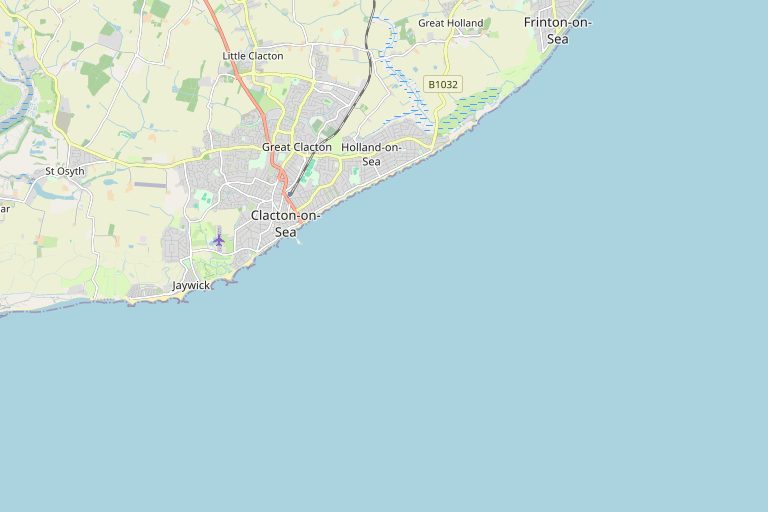
We operate throughout Clacton-on-Sea and the surrounding areas, including the CO15 postcode area, as part of our coverage across the East of England. The same team also covers Colchester, Ipswich, Southend-on-Sea and Braintree.
We also cover Frinton-on-Sea, Walton-on-the-Naze, Harwich and Felixstowe.